
Home / Treatments / Shoulder Pain Treatment
Shoulder Pain Care in Aventura, FL
Shoulder pain can start with a fall, a hard throw, lifting at work, or slowly from years of reaching overhead. At FTG Ortho in Aventura, our board-certified orthopedic team finds out what is causing your shoulder pain, from a rotator cuff tear to frozen shoulder or arthritis, and builds a plan that starts with non-surgical care whenever it is likely to help. When surgery is the better choice, we explain why and what to expect.
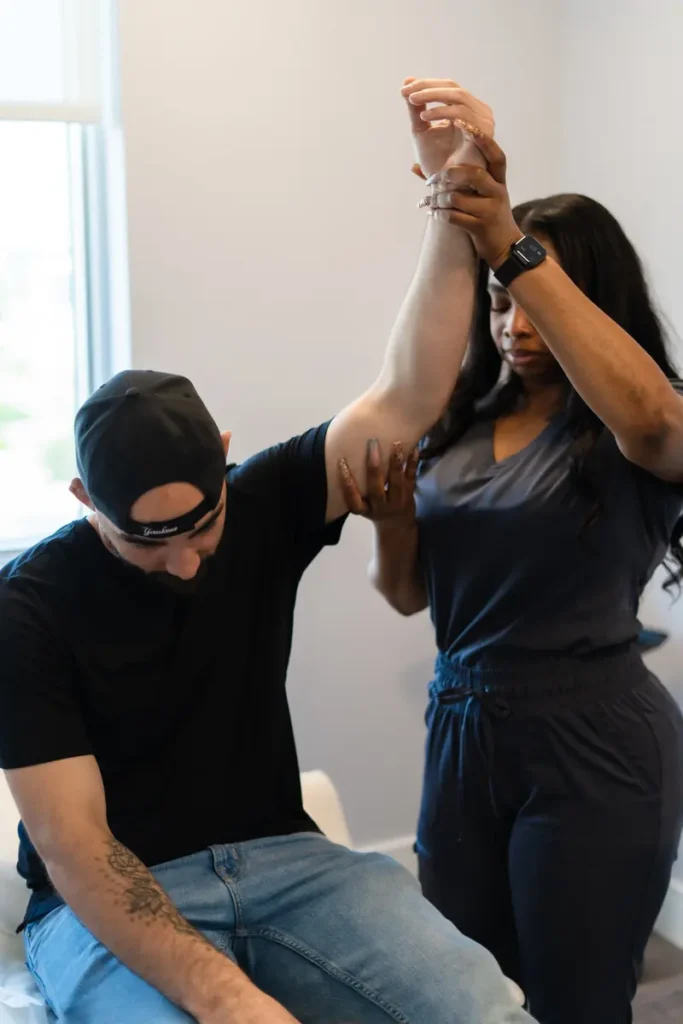
01
Overview
The shoulder is the most mobile joint in the body. A shallow ball-and-socket joint is held in place by the rotator cuff, a group of four muscles and their tendons, along with a ring of cartilage called the labrum and the joint capsule. That freedom of movement also makes the shoulder easy to strain, tear or wear down.
Pain can come from a sudden injury, such as a fall on an outstretched arm or a sports collision, or build up over time from repeated overhead work, throwing, swimming or lifting. Age-related wear of the tendons and cartilage is also common after 40. Some shoulder pain actually starts in the neck, which is why a careful exam matters. Pain on the outside of the upper arm, pain when reaching overhead or behind your back, weakness, stiffness and pain at night when lying on the shoulder are the most common signs we see.
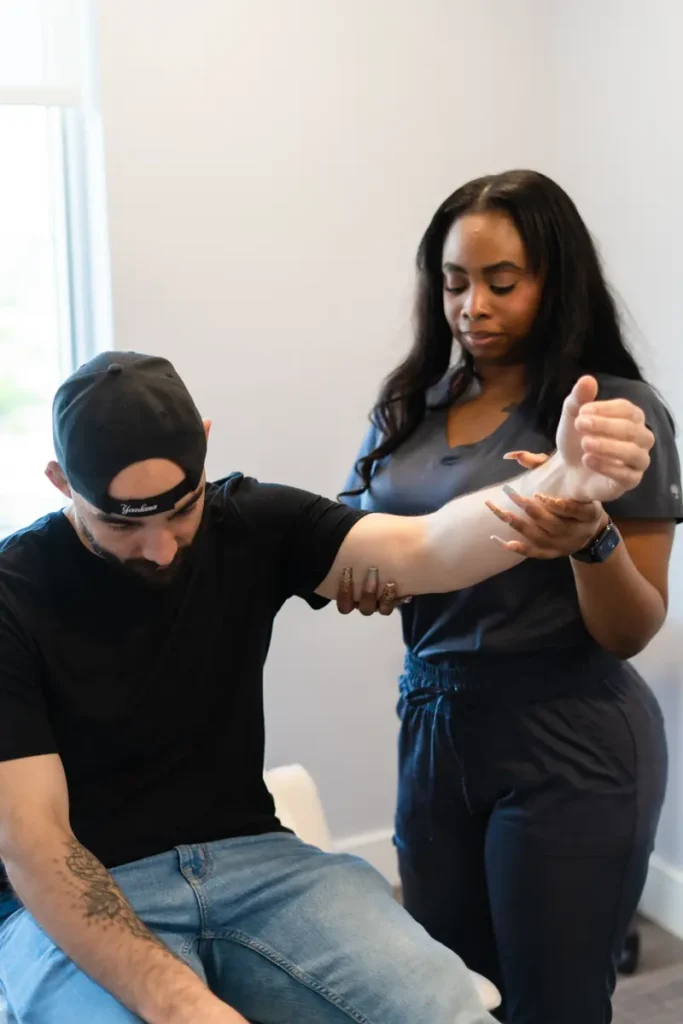
02 / Conditions We Treat
We treat sudden shoulder injuries and long-term shoulder pain in adults of all ages and activity levels.
Irritation, fraying or tears of the tendons that lift and turn the arm, from an injury or from wear over time. Signs include pain when lifting the arm, weakness and night pain.
Pinching of the rotator cuff and the fluid-filled bursa under the top of the shoulder, often from repeated overhead activity. It typically hurts when reaching up or out to the side.
Also called adhesive capsulitis: the joint capsule thickens and tightens, so the shoulder becomes painful and stiff over months. It is more common between 40 and 60 and in people with diabetes.
Wear of the cartilage in the main shoulder joint or the small AC joint at the top of the shoulder, causing deep aching, grinding and loss of motion.
A shoulder that slips out of place, feels loose or catches, often after a fall or sports injury. A tear of the labrum (including SLAP tears) can cause clicking and pain with overhead use.
Breaks of the collarbone or upper arm bone, AC joint separations and shoulder strains from a fall, a car accident, sports or a work injury.
03 / Treatment Options
Most shoulder problems improve without surgery. Surgery is considered when a tendon is badly torn, the shoulder keeps dislocating, a fracture is out of place, or arthritis pain keeps limiting daily life after other care. Your plan depends on your diagnosis, age, work and activity goals.
Guided exercises to restore motion and strengthen the rotator cuff and shoulder blade muscles, the first step for most shoulder pain, frozen shoulder and many partial tears.
Anti-inflammatory injections into the shoulder joint or bursa can calm pain so you can move and do your therapy. Your doctor will explain if they suit you and how often they can be used.
An injection made from a small sample of your own blood, used for some tendon problems. Ask your specialist whether PRP is an option for your shoulder.
Short rest, a sling after some injuries, ice, anti-inflammatory medicine when safe for you, and changes to how you lift, reach or train while the shoulder heals.
Care and documentation for shoulder injuries from a job or an accident, including workers' comp and liability cases.
Keyhole (arthroscopic) surgery to repair torn tendons or the labrum, and shoulder replacement for advanced arthritis or some fractures, when non-surgical care is not enough.
04 / What to Expect
01
We ask where it hurts, how it started and which movements make it worse, then check your range of motion, strength, stability and your neck.
02
An X-ray, MRI or ultrasound may be ordered to confirm the diagnosis, for example a rotator cuff or labral tear (see Digital Imaging). Bring any past shoulder imaging or reports.
03
Your specialist explains your options in plain words, with the pros, cons and expected recovery of each, so you can decide together.
04
Follow-up visits track your progress, and we adjust the plan as your shoulder heals and you return to work, sports and daily activities.
05 / Why FTG Ortho
From your first visit to full recovery, we focus on finding the cause of your shoulder pain, not just masking it. Hurt your shoulder playing sports? Read Sports Injury? When to See an Orthopedic Doctor, or see how our sports medicine team helps athletes get back to play.
When to get help
Mild soreness after a long day of work or a hard workout often settles with a few days of rest. Book an orthopedic visit if you notice any of these signs. Go to an emergency room if your shoulder or arm looks deformed after an injury, or if shoulder or arm pain comes with chest pain, shortness of breath or sweating, which can be a sign of a heart problem.
Every treatment has possible downsides, and your doctor will review them with you. Injections can cause short-term pain or swelling and, rarely, infection; steroid injections can raise blood sugar for a few days in people with diabetes, and repeated steroid injections may weaken tendons. Anti-inflammatory medicines are not right for everyone, for example people with stomach ulcers, kidney disease or some heart conditions. PRP can cause soreness for a few days, and results differ from person to person. Shoulder surgery carries risks such as infection, stiffness, nerve injury and blood clots, and recovery usually means a sling for a period and several months of physical therapy. Tell your doctor if you are pregnant, have an infection, a bleeding disorder or uncontrolled diabetes, or take blood thinners.
Cost depends on your diagnosis, the treatment you choose and your insurance plan; our team can explain your coverage before treatment. If your shoulder was hurt at work or in an accident, our team can also explain how workers’ comp and liability cases work.
FTG Ortho is at 2801 NE 213th St #1209, Aventura, FL 33180. We see patients with shoulder pain from Aventura, Sunny Isles Beach, Golden Beach, Hallandale Beach, North Miami Beach, North Miami and across South Florida, Monday to Friday, 9am to 5pm. Request an appointment or call (305) 937-1999.
FAQs
Answers to common questions about shoulder pain treatment at FTG Ortho in Aventura, FL.
An orthopedic specialist diagnoses and treats problems of the bones, joints, ligaments and tendons, including the shoulder. At FTG Ortho in Aventura, our board-certified orthopedic surgeons and sports medicine team treat shoulder pain with both non-surgical and surgical options. Whether you need a referral depends on your insurance plan; call (305) 937-1999 and our team can help you check.
Common signs are pain on the outside of the upper arm, pain when lifting the arm or reaching behind your back, weakness, and pain at night. A sudden tear may follow a fall or a pop. Only an exam, and often an ultrasound or MRI, can confirm a tear and show how large it is, which guides treatment.
Many partial tears and wear-related tears improve with physical therapy, activity changes and other non-surgical care, even though the tendon may not fully grow back. Large or full tears after an injury, especially in younger, active people, or tears that leave the arm weak, may need surgical repair. Your specialist will recommend the best option after an exam and imaging.
Lying on the shoulder presses on irritated tendons and the bursa, and when you are still at night the joint can stiffen and ache. Night pain is common with rotator cuff problems, bursitis and frozen shoulder. If it keeps waking you, have it checked; treating the cause usually helps sleep too. Shoulder replacement for advanced arthritis is explained on our Joint Replacements page.
It depends on the cause. Tendinitis or bursitis may settle in a few weeks with the right care, while frozen shoulder can take many months to loosen. After rotator cuff repair or shoulder replacement, recovery usually takes several months of physical therapy. Your specialist will give you a realistic timeline and adjust it as you heal.
Keep exploring
Diagnosis and treatment of sports and activity injuries, from sprains to ACL and meniscus tears, with non-surgical care first.
FTG Ortho offers on-site digital X-ray, MRI and ultrasound in Aventura, so your orthopedic specialist can see what is...
Joint replacement at FTG Ortho replaces a damaged hip, knee or shoulder joint with durable implant components to relieve...
This page is for general information only and is not medical advice. Results vary. Talk with an FTG Ortho provider about which treatment is right for you.